If you’ve spent even a little time around performance car communities, you already know one thing—BMW’s M lineup is built for enthusiasts who rarely leave things stock. Whether it’s the aggressive stance of the latest M5 or the razor-sharp handling of the M3, there’s always that itch to unlock more power, more sound, and honestly, more personality. That’s where downpipes enter the picture.
In this guide, we’ll break down how bmw m5 g90 g99 secondary downpipes, what benefits they bring, and what you should consider before installing them.
What Are Downpipes and Why Do They Matter?
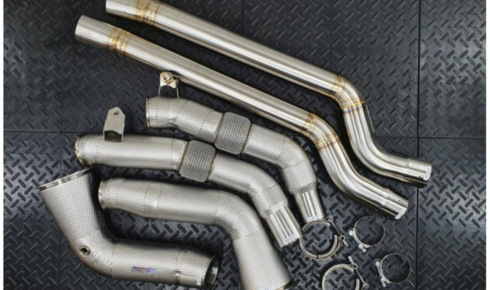
Downpipes are part of your car’s exhaust system, connecting the turbocharger to the rest of the exhaust. In modern turbocharged engines—like those found in the BMW M5 and BMW M3—they play a crucial role in managing airflow and exhaust pressure.
Stock downpipes are typically restrictive because they include catalytic converters designed to meet emissions regulations. While that’s great for the environment, it’s not ideal for performance. Aftermarket downpipes reduce this restriction, allowing exhaust gases to flow more freely.
And when airflow improves, so does engine efficiency—and ultimately, performance.
BMW M5 G90/G99 Secondary Downpipes Explained
The newer M5 G90 and G99 models come with a sophisticated hybrid-assisted V8 setup, which already delivers impressive power figures. However, enthusiasts looking to push beyond factory limits often turn to bmw m5 g90 g99 secondary downpipes.
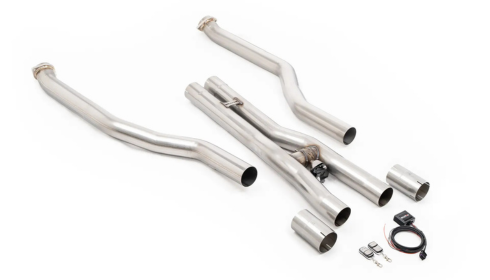
Secondary downpipes sit further down the exhaust system compared to primary ones. Their role might seem minor, but they still contribute to overall exhaust flow. Upgrading them typically results in:
- Slight horsepower and torque gains
- Enhanced exhaust note (deeper and more aggressive)
- Improved turbo efficiency
Unlike primary downpipes, secondary ones usually don’t trigger check engine lights, making them a safer and more subtle upgrade for daily drivers.
BMW M3 G80 Downpipes: A Bigger Impact
Now let’s talk about the BMW M3—a car that has quickly become a favorite among tuners. The S58 engine under the hood is incredibly responsive to modifications, and bmw m3 g80 downpipes are often one of the first upgrades owners consider.
Primary downpipes in the M3 G80 directly affect turbo performance. Replacing them with high-flow or catless versions can lead to:
- Significant horsepower gains (often 30–50+ HP with tuning)
- Faster turbo spool
- Louder, more aggressive exhaust tone
However, unlike secondary upgrades, primary downpipes may require ECU tuning and can trigger warning lights if not handled properly.
Performance vs Practicality: What Should You Choose?
Choosing between secondary and primary downpipes really comes down to your goals.
If you want a balanced upgrade—something that enhances sound and performance without major complications—secondary downpipes on the M5 G90/G99 are a smart pick.
But if you’re chasing serious performance gains and don’t mind additional tuning or setup work, M3 G80 downpipes offer a more noticeable transformation.
That said, it’s not always about going all-in. Many enthusiasts prefer a staged approach: starting with secondary modifications and gradually moving toward more aggressive upgrades.
Things to Consider Before Installing Downpipes
Before you jump into any modification, it’s worth taking a step back and thinking about the bigger picture.
- Legal compliance: Some downpipes may not be street-legal in certain regions
- Warranty impact: Modifications can void manufacturer warranties
- Tuning requirements: Especially important for primary downpipes
- Sound preference: Louder isn’t always better for daily driving
A well-thought-out upgrade plan always beats a rushed decision.
Final Thoughts
BMW has engineered the M5 and M3 to deliver incredible performance straight from the factory—but for enthusiasts, “incredible” is often just the starting point. Whether you’re exploring bmw m5 g90 g99 secondary downpipes for subtle refinement or diving into bmw m3 g80 downpipes for maximum gains, the key is understanding what each upgrade brings to the table.
At the end of the day, it’s not just about speed or sound—it’s about building a driving experience that feels uniquely yours.