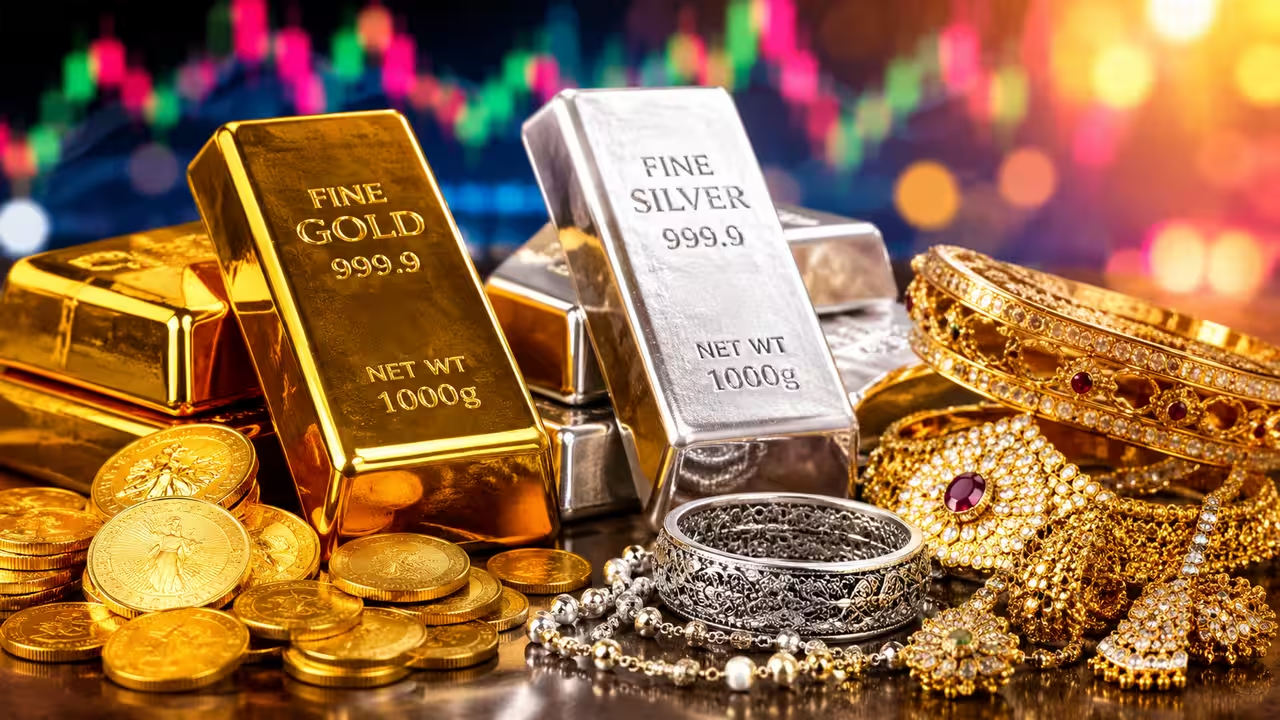
Precious metals continue to hold a prominent place in India’s investment landscape, with many households and investors tracking daily price movements as part of their financial routine. A complete price update typically covers both gold and silver, since the two metals, while related, often respond to different sets of triggers. Alongside these updates, keeping an eye on the Sensex Today adds useful context, as equity market sentiment frequently interacts with bullion demand in ways that shape the overall price picture for both gold and silver.
Understanding How Prices Are Determined
Both gold and silver prices in India are anchored to international benchmarks, where the metals trade in dollar terms on major global exchanges. These international prices form the base from which domestic rates are derived, after accounting for currency conversion, import duties, and other local costs such as making charges for jewellery.
Because both metals share this common international pricing mechanism, their price movements often show some correlation. However, they don’t always move in perfect tandem, since each metal has its own distinct demand drivers that can cause their price paths to diverge at times.
What Moves Gold Prices
Gold’s price movements are largely driven by its role as an investment and reserve asset. Central bank buying patterns, currency movements, and expectations around interest rate policy all play a significant role in shaping gold’s daily price. When there is anticipation of lower interest rates, gold tends to become more attractive, since the opportunity cost of holding a non-yielding asset decreases in such an environment.
Geopolitical developments and global economic uncertainty also tend to support gold prices, as investors often view the metal as a relatively stable store of value during turbulent periods. Domestically, festive and wedding season demand adds a seasonal dimension to gold buying patterns, which can create temporary price premiums in certain periods.
What Moves Silver Prices
While the Silver Rate Today is influenced by many of the same broad factors as gold, including currency movements and interest rate expectations, silver carries an additional layer of complexity due to its extensive industrial applications. Silver is used across electronics manufacturing, solar panel production, and various other industrial processes, which means its price is also sensitive to trends in industrial demand and manufacturing activity.
This dual identity, as both a precious metal and an industrial input, often makes silver prices more volatile than gold on a day-to-day basis. A pickup in industrial activity or growth in renewable energy adoption can add upward pressure to silver prices, somewhat independent of investment-driven demand.
The Currency Connection
The rupee-dollar exchange rate plays a central role in shaping both the Gold Rate Today and the Silver Rate Today within the Indian market. Since both metals are priced internationally in dollars, a weaker rupee tends to push up domestic prices for both, even when international rates remain relatively stable. A stronger rupee, conversely, can help ease some of the upward pressure on prices, offering a degree of relief to buyers even amid firm global rates.
How Equity Markets Fit Into the Picture
Tracking the Sensex Today alongside daily precious metal prices offers a broader perspective on market sentiment. During periods of equity market volatility or global economic uncertainty, some investors shift a portion of their portfolio toward gold and silver as a way to diversify risk. This behaviour can result in firmer bullion prices even as equity indices face downward pressure.
On days when the Sensex Today performs well, supported by positive earnings or favourable economic data, investment demand for precious metals may moderate slightly, as investor attention shifts toward growth-oriented assets. That said, this relationship isn’t always inverse, since both equities and bullion can rise together during periods of broader economic optimism, particularly when driven by factors like currency depreciation or ample global liquidity.
Comparing the Two Metals
For investors trying to decide how to approach precious metals as part of their portfolio, understanding the distinct behaviour of gold and silver is useful. Gold tends to offer more stability and is primarily driven by investment and reserve demand, making it a relatively steadier component within a diversified portfolio. Silver, while offering similar diversification benefits, tends to exhibit sharper price swings due to its industrial demand component, which can appeal to investors comfortable with slightly higher volatility in exchange for potential upside tied to industrial growth trends.
Many investors choose to hold a combination of both metals, using gold for relative stability and silver for exposure to industrial demand trends, while keeping an eye on the Sensex Today to understand how broader market conditions might be influencing bullion demand at any given time.
Conclusion
A complete price update for precious metals involves understanding the distinct forces shaping both the Gold Rate Today and the Silver Rate Today, from currency movements and interest rate expectations to industrial demand trends. Viewing these updates alongside the Sensex Today provides additional context, helping investors understand how equity market sentiment and bullion demand interact on any given day, and supporting more informed decisions around portfolio allocation.
Disclaimer: This article is for educational and informational purposes only and should not be considered investment advice. Investments are subject to market risks. Past performance does not guarantee future returns. Investors should assess their financial goals and risk appetite and consult a qualified financial advisor before making investment decisions.